

Personalized Pharmacotherapy
Personalized pharmacotherapy refers to tailoring medication treatments to individual patients, aiming to maximize efficacy and minimize side effects. In our work, we focus specifically on medication adherence and genetic factors to optimize therapy and ensure the best possible outcomes for each patient.
Medication Adherence
Overview
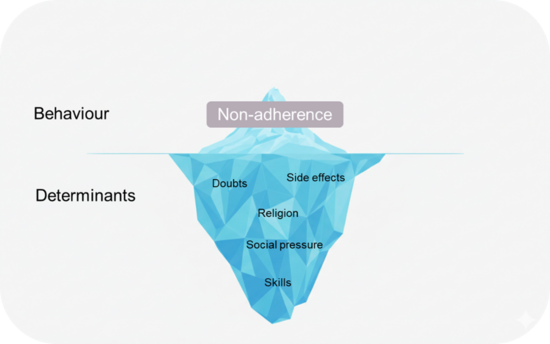
Between one third and one half of medicines prescribed for long-term conditions are not taken as recommended, leading to negative consequences for patients, healthcare systems and society. Medication adherence describes the process by which patients take their medications as prescribed. Non-adherence can reduce treatment effectiveness and worsen health outcomes. It can be intentional, when patients choose not to follow recommendations, or unintentional, due to factors such as forgetfulness or language barriers. Therefore, improving adherence requires understanding patients’ perspectives and the reasons they may be unwilling or unable to take their medications.
Our Vision: From Understanding to Action - Medication Adherence in Practice
Together with patients and healthcare professionals, we seek to understand patient behavior and how medication non-adherence is addressed in clinical practice. By engaging directly with those affected, we aim to create meaningful solutions that effectively tackle challenges in medication adherence.
Current Projects
Missed-Dose Management in Theory and Practice: Analysis of Official Instructions and Real-World Behavior
Non-adherence can have clinically significant consequences, even after a single missed dose, particularly for drugs with low forgiveness. Although missed doses are common, most often due to forgetfulness, guidance on how to manage them is inconsistent and insufficiently studied. While research focuses on improving adherence, real-world patient behavior and the clarity of missed-dose instructions remain underexplored.
This PhD project investigates missed-dose management from literature, regulatory and real-world patient perspectives through four planned phases.
- A comprehensive review will identify and analyze existing recommendations on how to manage missed doses across therapeutic areas.
- Using quantitative Natural Language Processing (NLP), all Swiss Drug labels will be systematically analyzed to determine whether and how they provide instructions for missed-dose situations. We will examine which therapeutic classes include guidance, the thematic content of these instructions and whether the wording provides clear, actionable advice for real life situations.
- To understand real-world behavior, semi-structured interviews will be conducted with patients who regularly take medications and have experienced difficulties with adherence and with healthcare professionals involved in medication dispensing and counselling. This phase will explore how missed doses are handled in daily life, perceived uncertainties and counselling practices.
- Building on the qualitative findings, the project will continue with a quantitative phase to assess and validate emerging themes in a larger population.

Optimizing Medication Adherence Using mobile Health Solutions
In times of increasing digitalization, medication adherence applications represent a promising approach to supporting medication use in a way that is easily integrated into patients’ everyday lives. Currently, the market offers a wide variety of adherence apps that differ in functionality and quality.
This research project consists of three phases: understanding the needs of patients and healthcare professionals regarding adherence apps, testing the feasibility of an app-based service in practice, and preparing strategies for future implementation. In the first phase, we investigated the expectations and needs of patients and healthcare professionals regarding adherence apps, including key features, design considerations, and overall functionality. In two studies (SMAPP-Study: NCT06126900; PIPPI-Study: NCT06094062) an adherence app was evaluated in real-world practice and offered to patients through participating pharmacies. This approach enabled us to gain comprehensive insights into how app-based adherence solutions can be integrated into routine pharmacy workflows. The real-world testing highlighted potential barriers and challenges faced by both patients and healthcare professionals. Based on these findings, we have derived implementation strategies and collected the perspectives of Swiss pharmacy staff regarding their usefulness and feasibility. These strategies now require evaluation in clinical practice to further determine how adherence apps can be effectively implemented within routine care.

Publications:
- Messner K, Sutter V, Allemann S, Arnet I. Exploring the Fit Between the Outputs of Freely Available Medication Adherence Apps and Users’ Needs: Mixed Methods Study. JMIR mHealth and uHealth 2025 Dec 16;13(1):e68919. doi: 10.2196/68919
The Hidden Complexity of Manufacturer Switches in Epilepsy Care
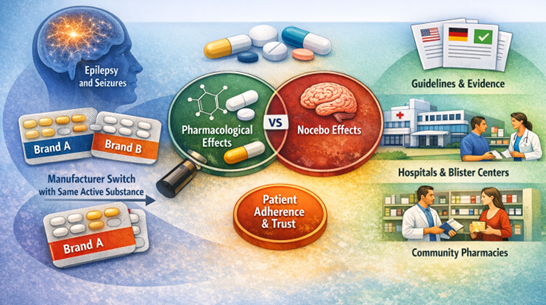
Epilepsy is a common neurological disorder that affects the cognitive and psychological functioning of affected individuals. Beyond the challenges posed by the disease itself, treatment experiences play a crucial role in patients’ quality of life. In particular, switches between different manufacturers of the same active substance may increase the risk of adverse events as breakthrough seizures, which is why such switches are often discouraged in clinical practice.
The aim of this project is to examine whether the adverse events reported during manufacturer switches are due to pharmacological differences or to nonpharmacological mechanisms, such as nocebo effects. To address this issue comprehensively, the project investigates how national and international guidelines approach manufacturer switches, what evidence they rely on, and whether nonpharmacological influences are taken into account. It also explores how hospitals and blister centers internationally manage their antiseizure medication portfolios to maintain continuity of care. Furthermore, the challenges and experiences faced by community pharmacies in daily practice are examined. In this context, patient adherence and trust in their therapy play a central role, as stable therapeutic regimens rely on patients feeling confident and well supported in their treatment.
An initial mixed methods study examined the difficulties community pharmacists face when substituting generic controlled substances and identified the types of support they consider necessary. The findings revealed that medications acting on the nervous system, particularly antiseizure medications, pose specific challenges in manufacturer switches. These results form the basis for the current investigation into manufacturer switches involving the same active substance in antiseizure medications. By examining both pharmaceutical and nonpharmaceutical aspects, the project aims to deepen our understanding of this issue and contribute to safer and more consistent care for individuals with epilepsy.
Publications:
- Keller IM, Alexa JM, Meier MW, Allemann SS. A mixed-methods study investigating the potential and challenges of generic substitution of controlled substances in community pharmacies. Explor Res Clin Soc Pharm., 2025:100622. https://doi.org/10.1016/j.rcsop.2025.100622
Pharmacogenetics
Overview
Inter-individual variability in drug response is a well-known phenomenon, influenced by a combination of factors such as health status, drug-drug interactions, drug-food interactions, and genetics. Pharmacogenetics (PGx) focuses on genetic variations that affect drug efficacy and tolerability. PGx testing aims to optimize drug therapy by predicting treatment responses, to minimize adverse drug reactions (ADRs), and to improve treatment outcomes. However, PGx testing has not yet become an integral part of routine patient care.
Our Vision: Implementation of Pharmacogenotyping in Clinical Practice
Our research group is dedicated to closing this gap by investigating the clinical applicability of pharmacogenotyping and facilitating its implementation into pharmaceutical care. Through interdisciplinary collaborations, we aim to integrate PGx testing into real-world healthcare settings with the overall goal to ensure a safe and effective pharmacotherapy for every patient.
Our efforts to integrate pharmacogenotyping into clinical practice are strengthened by a close collaboration with the Biopharmacy and the Clinical Pharmacy & Pharmacoepidemiology Research Groups at the University of Basel.
Current Projects
Pharmacogenetic Testing of Patients with Unwanted Adverse Drug Reactions or Therapy Failure
Genetic makeup of a patient influences the efficacy and safety profile of a drug. This study (ClinicalTrials.gov identifier: NCT04154553; EKNZ ID: 2019-01452) is to summarize individual cases, where pharmacogenetics has been applied during pharmaceutical care. Health-related data of patients experiencing therapy failure or adverse drug reaction is collected and will then be supplemented with pharmacogenetic testing during pharmaceutical care in a study pharmacy. The patient data (diagnoses, medications and results of pharmacogenetic testing) is harmonized in order to generate a compilation of case reports. The primary objective is the compilation of case reports, where pharmacogenetic testing is applied to determine the hereditable component of the patient's susceptibility to experience therapy failure and/or adverse drug reactions. The experience with the compiled cases will be basis for the development of a reliable standard of procedure for pharmacogenetic testing in the community pharmacy. The cases will be supplemented with information on additional Parameters reported in the literature to affect efficacy or safety of the respective drug.
Publications:
- Bollinger A, Stäuble CK, Jeiziner C, Wiss FM, Hersberger KE, Lampert ML, Meyer zu Schwabedissen HE, Allemann SS. Genotyping of Patients with Adverse Drug Reaction or Therapy Failure: Database Analysis of a Pharmacogenetics Case Series Study. Pharmgenomics Pers Med. 2023;16:693-706
doi.org/10.2147/PGPM.S415259
PrePGx Study: Pharmacist-Guided Pre-emptive Pharmacogenetic Testing in Antidepressant Therapy
The PrePGx study (ClinicalTrials.gov identifier: NCT04507555; EKNZ ID: 2020-01535) investigates whether pharmacogenetic testing can improve the effectiveness and tolerability of antidepressant therapy in patients with major depressive disorder. Since only about half of patients respond to the first antidepressant treatment they receive, the study aims to evaluate whether a more personalized treatment approach based on genetic information can improve treatment outcomes.
The study assesses whether pre-emptive pharmacogenetic testing, interpreted and applied by clinical pharmacists, can support physicians in selecting and dosing antidepressant medications more effectively.
The study is conducted as an open-label, randomized controlled trial across four psychiatric clinics in Switzerland. Adult inpatients diagnosed with a moderate to severe depressive episode are recruited at hospital admission. If a change or adjustment of antidepressant medication is required after the first week of hospitalization, participants are randomly assigned to one of two groups. In the intervention group, treatment decisions are supported by pharmacist-guided pharmacogenetic testing, while in the control group antidepressant therapy is selected according to standard clinical practice without access to genetic testing results. Patients who do not require a medication change are followed in an observational group.
The primary objective is to compare treatment response after four weeks of antidepressant therapy between the intervention and control groups. The findings are expected to provide valuable insights into how pharmacogenetic information and interprofessional collaboration between physicians and pharmacists can support more personalized antidepressant treatment in psychiatric care.
Publications:
Stäuble, C.K., Lampert, M.L., Allemann, S. et al. Pharmacist-guided pre-emptive pharmacogenetic testing in antidepressant therapy (PrePGx): study protocol for an open-label, randomized controlled trial. Trials 22, 919 (2021). https://doi.org/10.1186/s13063-021-05724-5
Wiss, Florine M. MSc1,2; Krieg, Christian D. MSc1; Lampert, Markus L. PhD1,2; Meyer zu Schwabedissen, Henriette E. MD3; Stäuble, Céline K. PhD1,3; Mikoteit, Thorsten MD4,5; Imboden, Christian MD4,6; Allemann, Samuel S. PhD1. CYP2D6 Phenotype as a Predictor of Adverse Drug Reactions in Patients Treated With Trazodone: An Explorative Pharmacogenetic Study. Journal of Clinical Psychopharmacology 46(2):p 179-188, March/April 2026. | DOI: 10.1097/JCP.0000000000002123
Investigating the Role of Pharmacogenetic Information on Medication Adherence in Precision Medicine
Pharmacogenetic (PGx) testing is increasingly used to personalize drug therapy and enhance medication safety and effectiveness. However, its impact on patient behaviour, particularly medication adherence, remains insufficiently understood. To address this gap, this research program comprises two interconnected projects: the theory-based development of a questionnaire and its integration into a prospective longitudinal cohort study.
The first project involved the systematic development of a questionnaire to assess determinants of medication adherence after receiving PGx information. A secondary analysis of a scoping review (13 publications) examined behavioural responses to PGx-informed treatment recommendations. Findings were mapped onto the Theoretical Domains Framework (TDF), informed by the COM-B model. Results show that adherence after PGx testing is shaped by behavioural factors beyond genetic optimization alone. In particular, health literacy, physician–patient relationship quality, and communication practices influence patients’ understanding, trust, and motivation to follow PGx-guided recommendations, highlighting the importance of cognitive, social, and emotional mechanisms.
In the second project, the questionnaire will be validated and implemented within an ongoing prospective cohort study (EKNZ 2023-00157) conducted by the Pharmaceutical Care Research Group (PCRG) at the University of Basel. Patients of the cohort study previously underwent PGx testing and received individualized recommendations. Annual follow-ups over three years collect medication- and health-related data to assess how often PGx information informs treatment decisions, what adjustments are made, and why recommendations are used or not used. With the integration of the newly developed questionnaire, we will additionally measure the extent and reasons for non-adherence, enabling a systematic assessment of factors that may positively or negatively influence medication adherence.
Based on the premise that genetic information remains stable over time, the central hypothesis is that PGx results obtained once should inform future prescribing decisions. By combining theory-driven instrument development with longitudinal real-world evaluation, this research advances understanding of behavioural mechanisms underlying medication adherence in PGx-informed care and supports the optimization and sustainable integration of PGx into clinical practice.
Publications:
- Bollinger, Anna, et al. "Impact and enablers of pharmacogenetic-informed treatment decisions—a longitudinal mixed-methods study exploring the patient perspective." Pharmacy 13.1 (2025): 14.