

Prof. Dr. Jörg Huwyler
Professor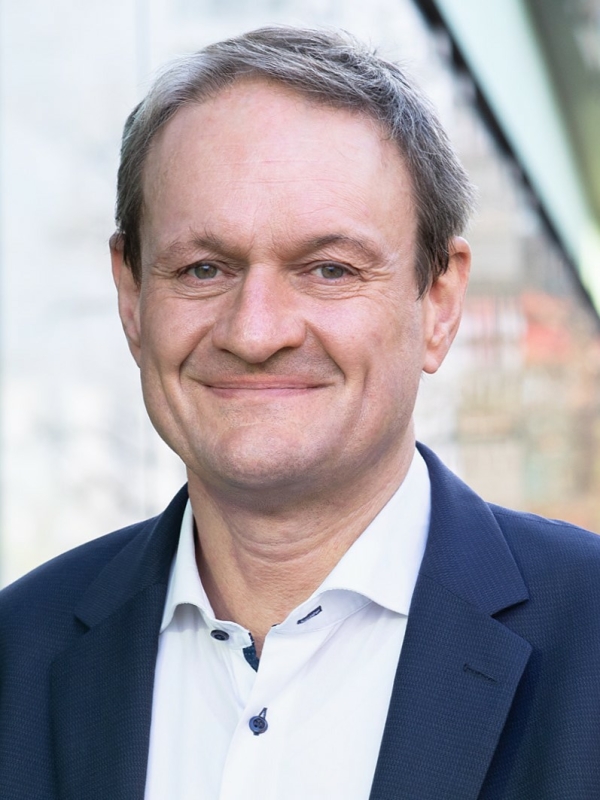
Professor
Klingelbergstrasse 50
4056 Basel
Schweiz
Curriculum Vitae
Prof. Dr. Jörg Huwyler is full professor and head of the Division of Pharmaceutical Technology, Department of Pharmaceutical Sciences, University of Basel. His research interests are in the field of drug delivery and drug targeting using particulate drug carriers. Important professional milestones after his PhD in biochemistry and a habilitation in pharmacy were appointments at the University Hospital of Basel and the Brain Research Institute, UCLA School of Medicine, Los Angeles. From 1999 to 2006 he joined the pharmaceutical industry, where he worked as DMPK project leader for F. Hoffmann-La Roche Ltd. in Switzerland. He joined the University of Basel in the year 2010. Jörg Huwyler is the author of more than 250 peer-reviewed original research articles and 50 reviews, technical reports and book articles.
Our research is focused on the use of pariculate drug carriers to implement oral drug delivery and parenteral drug targeting strategies.
Drug Delivery:
Our team has developed a novel pharmaceutical excipient consisting of calcium-phosphate microcapsules, which can be loaded with a wide variety of drug substances using a standardized loading protocol (Kost et al., 2023 and 2025). This allows for cost-efficient preparation of patient friendly solid dosage forms. Ongoing clinical evaluation of oally dispersible tablets (ODTs) with partners at the University Hospital Pharmacy Basel and the University Children’s Hospital in Basel highlights the potential of our novel formulation strategy (Golhen et al., 2023 and 2024). Mechanistic studies with a special focus on solid state chemistry of the inorganic drug carrier include synchrotron radiation-based X-ray imaging (Waldner et al., 2024), molecular dynamics simulations, and pharmacokinetic studies in human volunteers (Dao et al., 2024). In an effort to accelerate translation into clinics, a start-up company (Galvita Ltd., https://galvita.com) was founded.
Drug Targeting:
The ongoing SNF supported research program on gene delivery strategies is focused on the design of DNA-based lipid nanoparticles (LNPs) used for a gene replacement therapy for inhereited enzyme defects in the hepatic urea cycle (https://data.snf.ch/grants?q=huwyler%20sinergia). These activities include the design and physico-chemical characterization of functional lipids (Kucuzu et al., 2025), the implementation of targeting strategies (Alter et al., 2023; Lotter et al., 2025), quantification of LNP loading, cellular uptake and transfection efficiency (Lotter et al., 2024), and quantitative asseessment of intracellular targeting of LNPs including aspects of endosomal release and recycling, lysosomal degradation and nuclear transport (Cavegn et al., 2025). For the characterization and optimization of our particulate carrier systems, we use zebrafish larvae as a vertebrate screening model (Sieber et al., 2019).
Basel, March 2026